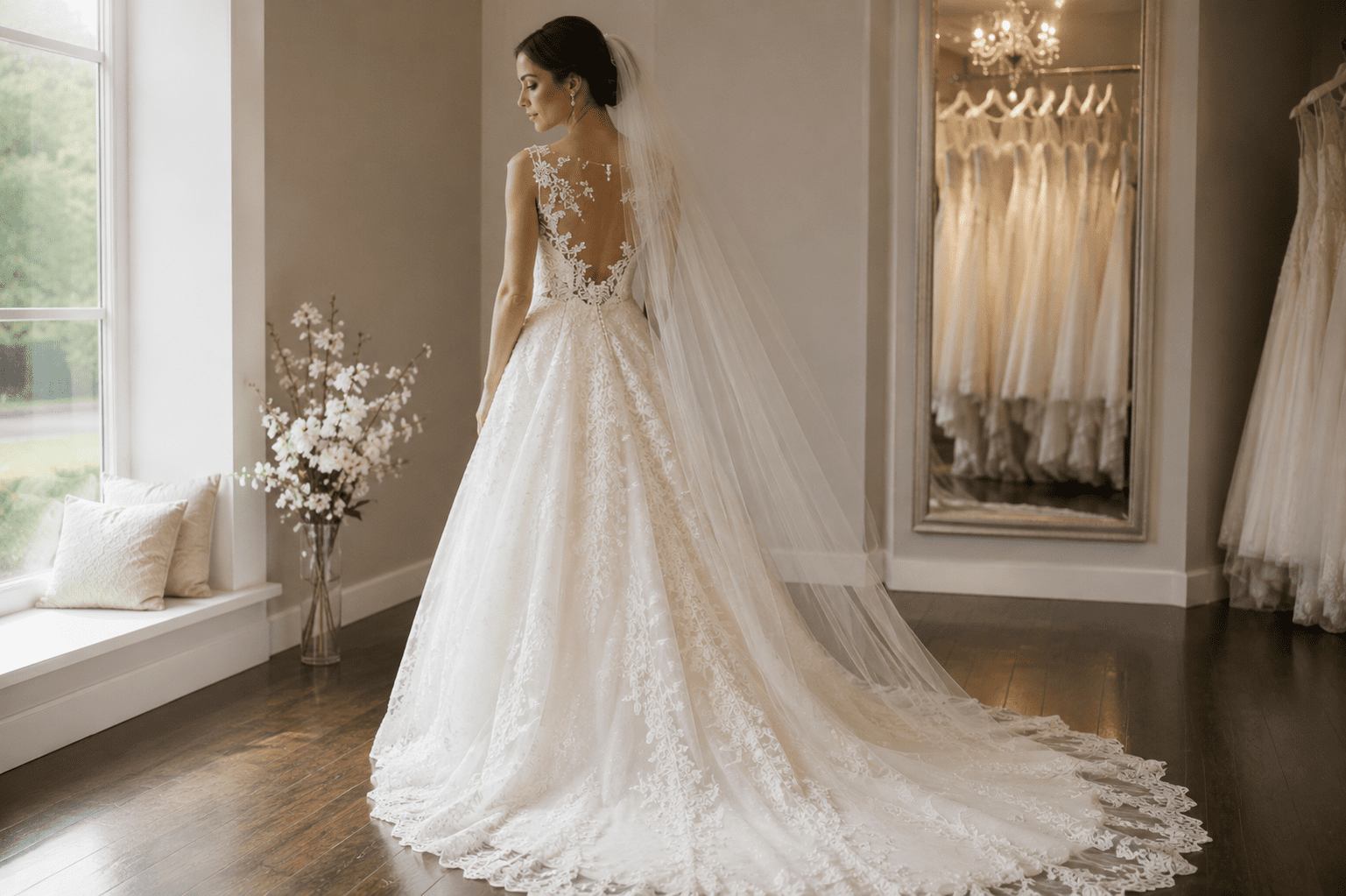
Most brides know they should preserve their wedding dress. What stops them is usually one question: when, exactly? Some are in the middle of honeymoon planning and set aside the dress. Others assume the dress looks fine and figure there's no rush. Some have already waited longer than they intended and aren't sure if it's even worth doing now.
This guide answers all of your questions. Whether your wedding was last weekend or three years ago, there's a clear recommended action for where you are right now.
Before the timeline starts, you need to understand one thing: your dress is not safe just because it looks clean and it's hanging in the closet.
Champagne, cake frosting, fruit juice, and other sugar-based spills are often colorless when they first land on fabric. They don't look like stains because they aren't visible yet. Over days and weeks, those residues oxidize and turn yellow or brown. By the time the thank you cards go out, what looked like nothing has become a real problem.
This is the most important fact in this entire guide: "The dress looks fine" is not the same as "the dress is clean." A dress that looked perfectly clean the morning after the wedding may show visible staining weeks later. That's not carelessness. It's chemistry.
Storing an uncleaned dress doesn't solve the problem. It continues.
The dress isn't protected because it's hanging in a bag. It's quietly degrading in ways you won't see until the damage is significant. Professional wedding dress preservation stops that process. Without it, storage is just a slower version of damage.
You are here if: You just got married within the past few days.
This is the best case scenario for preservation outcomes, and the guidance is simple.
You probably can't get to a cleaner today. That's fine. Here's how to protect the dress in the meantime:
The best thing you can do before drop-off: Store it properly and bring it in as soon as you can. Every intervention you skip at home is one less complication for the specialist to work around.
Fresh stains haven't oxidized yet, which means they respond to a wider range of professional treatments. Sugar residues are still colorless and fully removable. Body oils haven't begun to yellow. The fabric is still in the condition it was on your wedding day.
This is the best case window, not the only window. Every stage in this guide produces real results. This one just gives professionals the most to work with.
You are here if: The wedding was recent, but you've been on your honeymoon, hosting family, catching up on life, and the dress has been waiting in the closet.
Most brides land here, and this window is still excellent for wedding dress preservation. A two-week turnaround from wedding to drop-off is a strong outcome, not a compromised one.
| What May Have Changed | What It Means for Treatment |
|---|---|
| Some stains may now be faintly visible that were invisible right after the wedding | The specialist can see them directly during inspection, which actually makes targeted treatment easier. |
| Sugar residues have begun early oxidation | Professional pretreatment at this stage is still highly effective for most stain types. |
| Body oils have had more time to absorb | Deeper into the fiber than at 72 hours, but still well within the range of standard treatment. |
Most stains treated at this stage respond fully to professional cleaning.
You are here if: Life happened. The dress has been in the closet, or the back of a shelf, or the plastic bag from the bridal shop, for months. You've been meaning to get to it and you haven't yet.
You're not too late. Preservation at this stage is still absolutely worth doing for the large majority of dresses.
A professional assessment before the process starts gives you a clear, honest picture of what's possible for your specific dress. No surprises.
If your dress has been sitting in less than ideal conditions, here's what to address right now:
| Current Storage Situation | What to Do |
|---|---|
| In a plastic garment bag | Move it to a breathable cotton cover immediately. Plastic has been trapping moisture and accelerating yellowing the entire time it's been sitting there. |
| In an attic or garage | Get it into a climate controlled room today. An attic or garage in North Texas is genuinely one of the worst places to store an uncleaned dress. Texas heat and humidity fluctuations accelerate every chemical reaction in the fabric. |
| Hanging in a bedroom closet | This is actually the best default option. Cool, dry, stable temperature, away from light. If this is where yours has been, the dress is in better shape than you might think. |
This is a fair question, and it deserves a direct answer.
Professional wedding dress preservation is two things combined, not one:
Step 1: Cleaning removes what's already on the dress. Visible stains, latent sugar residues, body oils, perfume. Everything that would cause damage if left in the fabric.
Step 2: Preservation packaging prevents what happens next. Acid-free tissue, acid-free boxes, and sealed environments keep oxygen and humidity away from the fabric for decades. This stops oxidation, yellowing, and fiber breakdown.
Cleaning alone leaves the dress vulnerable to ongoing degradation in storage. Preservation packaging alone does nothing for stains already present. The combination is what makes the investment work.
A professionally preserved dress stored in a stable, climate controlled environment will remain in excellent condition for decades. That's well documented and consistently what brides find when they open a properly preserved dress years later.
Do the preservation correctly. Store the result properly. The process works.
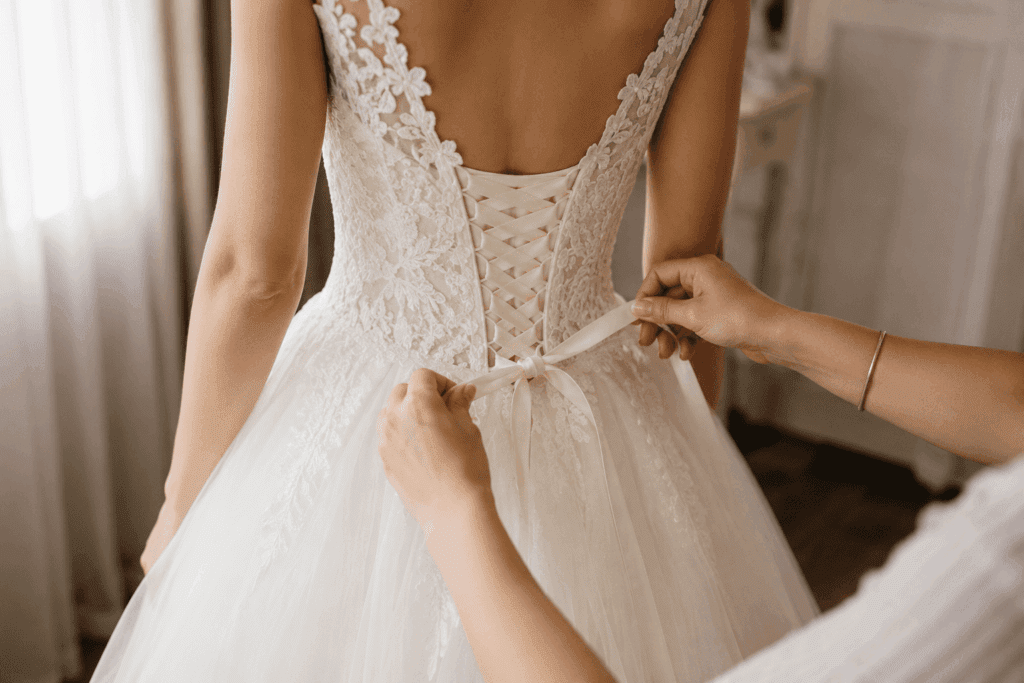
Every stage of this timeline comes with the same truth: the sooner you act, the more your cleaner can do. Whether you're in the 72-hour window or a year out, the next best time to move on your dress is right now.
At Mint Cleaners, we handle wedding dress cleaning and preservation with methods built for delicate lace, tulle, embroidery, and beading – the details that make your dress yours. We assess every dress individually before the process starts, so you get a clear picture of what's possible before any work begins.
Bring your dress in, and we'll take it from there.
📍Valley View Lane Location: (469) 874-0336
📍Arapaho Road Location: (972) 803-3766
📍Campbell Road Location: (972) 685-2090
📍Plano Road Location: (972) 644-6032
📧 Email: mintdrycleanersdfw@gmail.com