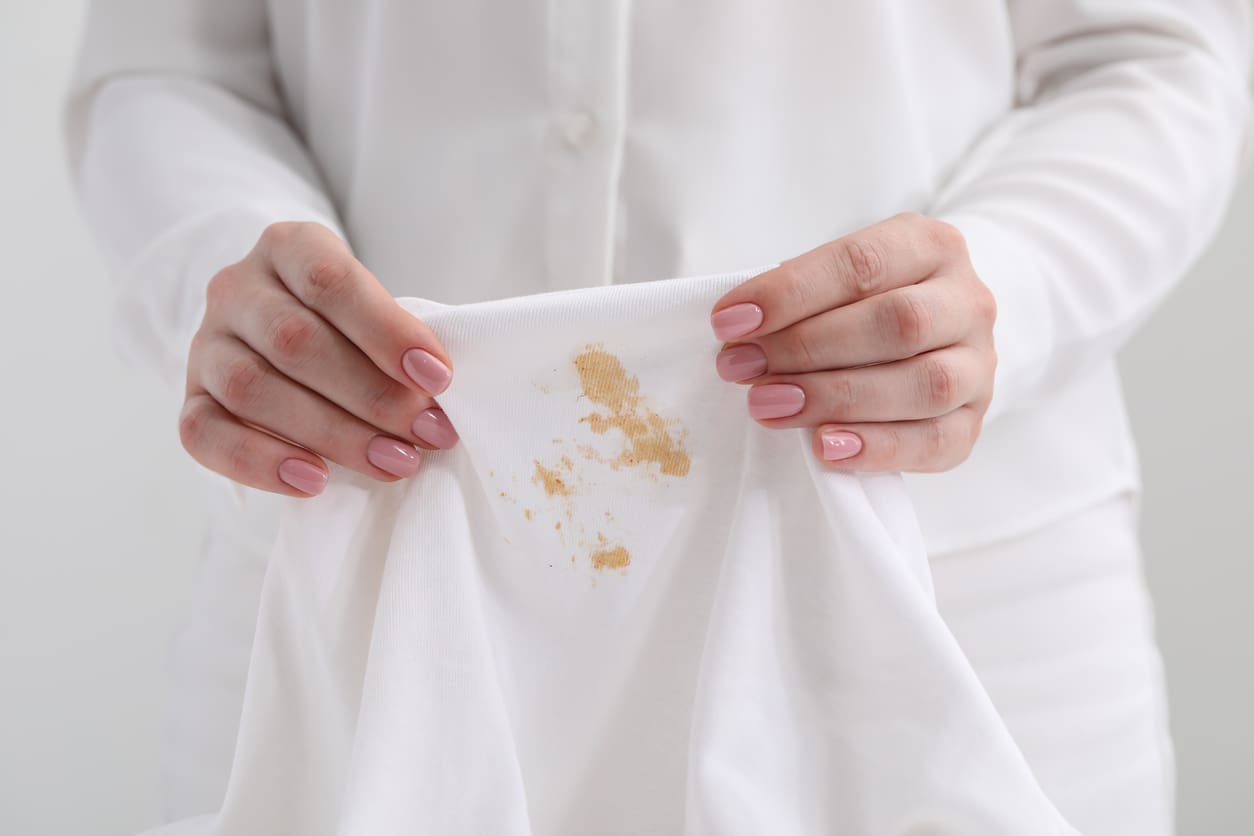
The appearance of a stain is a poor guide to whether it can be removed. A dramatic red wine splash on a white shirt might come out completely with professional treatment. A faint yellowish shadow on a collar after a dozen hot washes might be permanent.
What matters isn't how the stain looks, it's whether it's oxidized, heat-set, or reacted with the fabric's dye. Those three processes decide permanence, and none of them are visible to the naked eye.
Here's how to read the actual indicators and set a realistic expectation before you bring in the garment.
You’ll hear cleaners use the term constantly, but it doesn’t mean what most people think it means. A set-in stain isn’t just an old spot. It’s a stain that has gone through a specific chemical or physical change:
Unlike what most people think, a stain does not set in simply by sitting there. Time alone isn’t the enemy. Heat and improper handling are.
A three-month-old stain stored cool and dark is often more treatable than a three-day-old stain that went through a dryer. It sounds counterintuitive, but a dryer’s heat can fix a stain permanently in minutes, while one left alone may stay workable for months. Dryer exposure matters more than age.
A rough read doesn’t need a lab. A hard, stiff edge suggests heat-setting. A shifted hue, such as wine turning brownish, points to oxidation. Thinner or discolored fabric beyond the stain’s shape suggests a dye or finish reaction. None guarantee failure, but they set realistic expectations.
Three mechanisms turn a treatable stain into a permanent stain. Understanding them tells you why some stains bounce back easily, and others never do.
Sugar-based and tannin stains (wine, coffee, fruit juice) react slowly with oxygen in the air. The stain you see the day it happens is chemically different from the same stain a month later, and that new compound is harder to break down.
This is why the “colorless” spill you barely noticed on your wedding day can emerge as an amber patch after months in storage. The oxidation was happening the whole time; it just took time to become visible.
An iron or dryer applies enough heat to bond the stain’s proteins or pigments directly to the fabric fibers. Once that bond forms, it can’t be reversed with washing alone.
Some stains chemically interact with the dye used on the garment itself, or with finishing treatments applied during manufacturing. This creates discoloration that isn’t really a “stain” anymore. It’s a change to the fabric’s own chemistry.
If a stain hasn’t hit any of these three stages, it’s usually still recoverable, regardless of how old.
These are realistic odds for a stain that’s been sitting for several months – can dry cleaning remove stains at this stage? Often yes, but these aren’t guarantees. Think of them as a starting point for deciding whether or not a garment is worth bringing in.
Realistic odds: 60 to 80% if untreated and stored cool. 30 to 50% if previously washed or heat-exposed.
Oxidation on tannin stains happens gradually over weeks, not instantly. That means even a months-old wine stain often still responds to professional treatment, as long as it wasn’t heat-set along the way.
Realistic odds: 70 to 90% on most fabrics, even months later.
Oil-based stains have some of the best long-term recovery rates of any category. Dry cleaning solvents are built specifically to dissolve oils, so age matters less here than with other stain types.
Realistic odds: 50 to 80% with proper enzyme pretreatment. 20 to 40% if heat-set through a wash-and-dry cycle.
Protein-based stains respond to enzyme pretreatment because enzymes break down the protein structure directly. Once the stain has been through a dryer, heat denatures the protein and bonds it to the fiber in a way enzyme treatment can’t fully reverse which is why the odds drop so sharply after heat exposure.
Old yellow sweat stains on collars are particularly stubborn. Professional treatment can often lighten them noticeably, but full removal isn’t always realistic once they’ve set for a long time.
Realistic odds: 60 to 80% for ballpoint ink. 10 to 30% for permanent marker. Gel pen ink falls somewhere between.
Mystery stains are the hardest category to give odds on, because effective treatment depends on knowing the actual substance. If you have any idea what caused it, even a guess, share it.
Realistic odds: low.
By the time mildew is visible, it’s usually already weakened the fibers themselves, not just discolored the surface. Professional cleaning can sometimes lighten the visual damage, but it rarely restores the garment to fully wearable condition.
These ranges reflect general outcomes across stain type and treatment timing, not a guarantee for any single garment. Fabric type, dye stability, and prior treatment attempts all shift the actual odds up or down, which is exactly why the next two sections matter as much as the percentages above.
A stain doesn’t exist in isolation. The fabric underneath it changes the odds just as much as the stain type.
A red wine stain on white cotton and the same stain on dyed silk are not the same problem. The cleaner doesn’t just calculate “what’s the stain.” They calculate “what’s the stain, on what fabric, with what dye.”
Most modern clothing is a blend, and blends behave unpredictably. A cotton polyester shirt might handle water-based treatment well but trap oil, the same as pure polyester. Check the care tag, and mention the blend to your cleaner.
Professional stain treatment isn’t just “stronger detergent.” It’s a multi-step process that most home attempts only partially replicate and that dry cleaning combines in sequence:
A “miracle” stain remover doesn’t fail because it’s weak. It fails because stain removal is sequential: skip identification, and you risk the wrong agent; skip agitation, and it never fully penetrates the fiber. Professional treatment works by skipping nothing, not by using anything stronger.
The information you share changes which treatment method the cleaner uses, and it directly affects your odds. When you drop off a stained garment, tell them:
That last one matters most. If a home remedy fails, don’t hide it. Some home treatments react with professional solvents, and knowing what you already tried helps the cleaner avoid repeating a failed step or picking one that clashes with leftover residue.
Before you drop off the garment, picture explaining it to a doctor: what happened, when, and what you already tried. Cleaners work the same way. The more specific you are, the more targeted the treatment, and the better your realistic odds become.
That garment in your closet doesn’t need a verdict from a stain remover video; it needs a real look. At Mint Cleaners, we check what’s actually happening with your stain and your fabric before we tell you what’s possible. We built our dry cleaning service around a clear, consistent process, so every garment gets treated based on what it actually needs, not a one-size-fits-all approach.
Whether it’s a tannin stain, an oil mark, or something you can’t even identify anymore, we assess it honestly before any treatment begins. And with FREE Pickup and Delivery Service, getting that garment to us doesn’t mean rearranging your day.
Schedule your FREE Pickup and Delivery Service today, and let’s find out what’s really possible.
📍Valley View Lane Location 📞 (469) 874-0336
📍Arapaho Road Location 📞 (972) 803-3766
📍Campbell Road Location 📞 (972) 685-2090