Every formal garment has a range of what can be done with it, and that range depends on more than just the alteration for which you're asking. The fabric, the construction, the embellishments, the seam allowance – all of it determines what a tailor can realistically deliver.
Walking into a fitting without that framework usually leads to surprises. Here's a clear look at what's possible with formalwear alterations.
These are the bread-and-butter alterations, predictable in cost, manageable in timeline, and handled confidently by any experienced formalwear tailor.
Most of these wrap up in one fitting, plus a pickup. If your event is two to three weeks out and you only need one or two of these adjustments, you’re in good shape.
A single fitting doesn’t mean one visit. It means the tailor marks the adjustments during your fitting, completes the work, and you return for pickup, which may include a quick check for final approval. If the adjustment is minor, that check takes five minutes. Budget at least two trips.
Some alterations look simple but aren’t. These require more fittings because changing one part of a formal gown shifts how everything else hangs.
Plan for two to three fittings on any of these. Ask your tailor up front how many fittings they anticipate, then build that into your calendar before you count backwards from the event date.
It’s not just the hours, but also the expertise. A tailor skilled enough to reshape a structured bodice without compromising the boning, lining, and outer fabric works at a different level than someone hemming a pair of trousers. That skill has real value, and the fitting count reflects the precision required.
This isn’t just “harder”; it’s a fundamentally different alteration process. When a tailor alters an embellished piece, they typically have to:
That third step is where the real skill and time go. Matching bead placement, maintaining pattern continuity, and disguising the altered seam require patience and a practiced eye.
Cost reality: An embellished gown alteration can run two to three times the price of the same alteration on a plain dress. It’s an accurate reflection of the labor involved. If your gown is heavily beaded or features intricate lace panels, factor that into your budget before booking.
Ask specifically: Will embellishments need to be removed and re-applied? A good tailor will tell you honestly, walk you through what that involves, and give you a realistic estimate. If they don’t bring it up on their own, that’s a question worth raising yourself.
Strapless Dresses, Boning, and Bodice Construction
This comes up constantly, especially for brides and prom shoppers, and it’s worth understanding clearly.
A strapless dress stays up because of what’s built into it: internal boning, a fitted bodice band, and sometimes gripper tape or cups. The structural support is internal, not external. That means:
This is one of the most common misconceptions in formalwear alterations, and it’s important to name it directly: a poorly fitting strapless bodice cannot be solved at the strap. It has to be solved at the structure.
If you’re between sizes or your chest runs large, it’s often better to buy the larger size and have the bodice taken in than to squeeze into a smaller size and hope for the best. A tailor can reduce a fitted strapless bodice far more cleanly than they can add volume to one that’s too small.
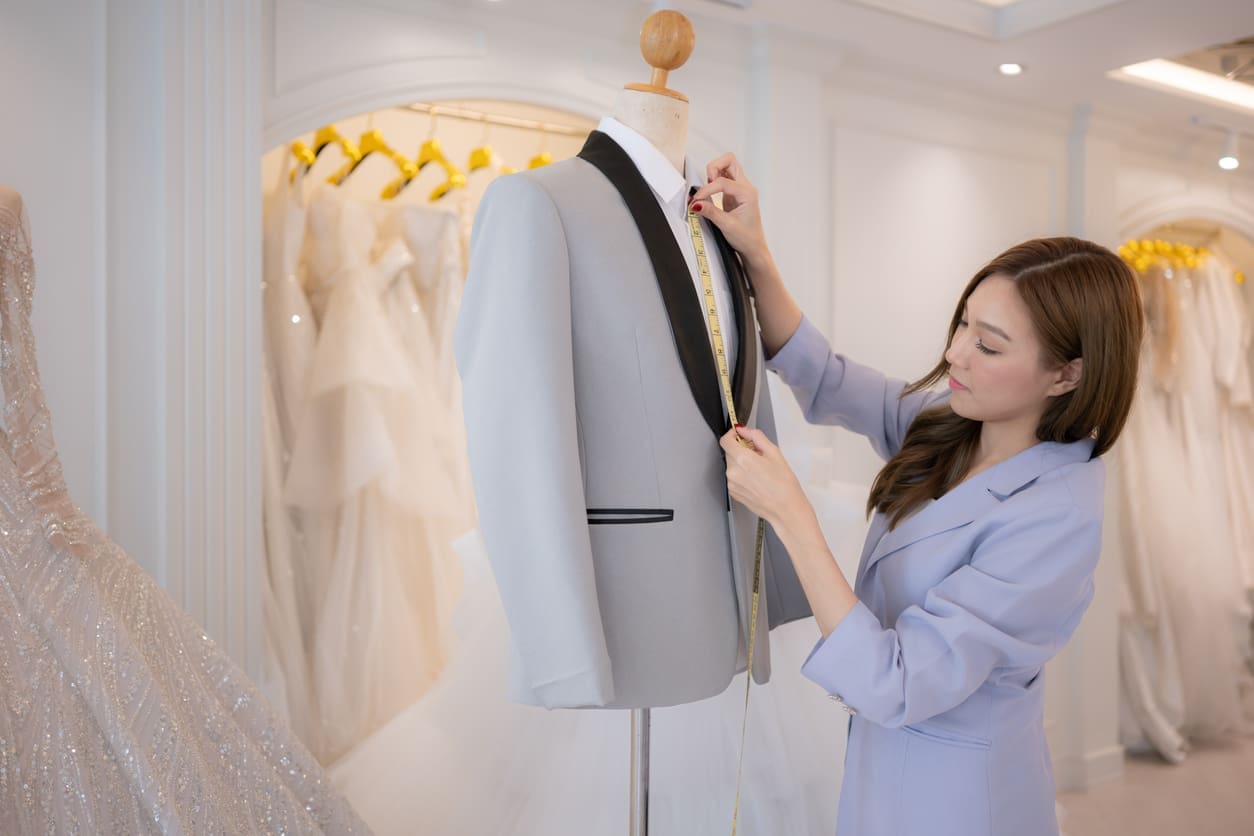
An off-the-rack or rental tuxedo rarely fits out of the box. The difference between “wearing a tuxedo” and “wearing it well” usually comes down to four specific adjustments:
Together, these four alterations transform a generic fit into something that actually looks intentional.
Rental tuxedos have real limits. Because the garment has to be returned in its original condition, significant alterations aren’t an option. If you’re wearing a rental, focus on the adjustments that can be undone, i.e., hemming with a temporary tack and minor sleeve adjustments.
Owned formalwear has no such constraint. If the tuxedo is yours, every alteration is on the table.
Rushing a formalwear alteration rarely ends well. Work backwards from your event date using these lead times:
Last-minute alterations are possible; most tailors will accommodate them, but expect rush fees and fewer revision options. The earlier you book, the more flexibility you have if something needs a second round of adjustment.
Formalwear tailors fill up fast in April, May, and the months leading up to peak wedding season. If your event falls between March and June, book even earlier than the guidelines above suggest. Two to three weeks of buffer is not excessive during those months.
What you bring affects the accuracy of every measurement the tailor takes.
During the fitting, don’t just stand. Sit down, walk across the room, reach forward. A dress that fits perfectly while you stand can gap, pull, or ride up the moment you sit at a dinner table. Your tailor needs to see the dress in motion, not just at attention.
If the garment has care instructions, bring those, too, especially for embellished or structured pieces. A tailor who knows the fabric content can make better decisions about how to handle the alteration zone.
At Mint Cleaners, our skilled tailors and seamstresses handle everything from a straightforward hem to complex structural alterations on embellished gowns, with the same precision we bring to every garment in our care. We serve customers across the Dallas area, including Valley View and the surrounding communities.
Ready to get the right fit before your event? Contact the location nearest you to schedule a consultation or fitting:
📍Valley View Lane Location 📞 (469) 874-0336
📍Arapaho Road Location 📞 (972) 803-3766
📍Campbell Road Location 📞 (972) 685-2090